



(North Kivu, South Kivu and Ituri, Democratic Republic of the Congo) — More than 11 million people in these three eastern provinces are projected to face Crisis levels of hunger or worse in the first half of 2027, according to a new food-security assessment highlighted by four UN agencies.
The November 13 joint warning from FAO, WFP, UNICEF and WHO links worsening hunger to conflict, repeated displacement, damaged livelihoods and disease outbreaks. For families pushed away from their fields, losing a harvest also means losing income to buy food when prices rise.
Current estimates and future risks are different
The Integrated Food Security Phase Classification analysis estimates that 28.8 million people nationwide face Crisis or worse acute food insecurity between September and December 2026, including 3.6 million in Emergency. For January–June 2027, it projects 30.3 million in Crisis or worse, including 4.2 million in Emergency.
Emergency is Phase 4 of the five-level scale and is already included in the Phase 3-or-above total. The figures must not be added together. These classifications and projections are not a declaration that 30.3 million people are experiencing famine today, nor a count of deaths.
The IPC puts the current eastern-province estimate at 10.4 million in Crisis or worse, including about three million in Emergency. That regional figure is part of the national total, not an additional population to add to it.
Keeping farming and essential services working
The UN agencies called for food assistance alongside support to restore agricultural livelihoods. FAO said seeds, tools and other inputs need to reach farmers before planting in early 2027 so they can harvest by mid-year. Such support is an appeal for action, not confirmation that assistance has already reached every affected community.
Congolese newsroom ACTUALITE.CD reported on November 14 that the analysis had been presented on November 12, following work conducted from September 21 to November 2. Its account relayed calls by agriculture and humanitarian officials for stronger resources and coordinated assistance. The presentation date is distinct from the UN release date.
That local reporting and the UN statement draw on the same IPC analysis; they are not separate household surveys. Their significance is the documented assessment and response priorities, not multiple independent measurements of the same population.
Health care, safe water and sanitation remain essential alongside food. The agencies warn that disease and malnutrition compound families' vulnerability. This report concerns the wider hunger outlook, not a new casualty total from the Cantine-Aloya attack. It is based on published material; TNC conducted no interviews or field reporting.
Sources and dates
- FAO, WFP, UNICEF and WHO joint release, November 13, 2026
- IPC, September–December 2026 situation and January–June 2027 projection
- ACTUALITE.CD, November 14, 2026 — local reporting on November 12 presentation
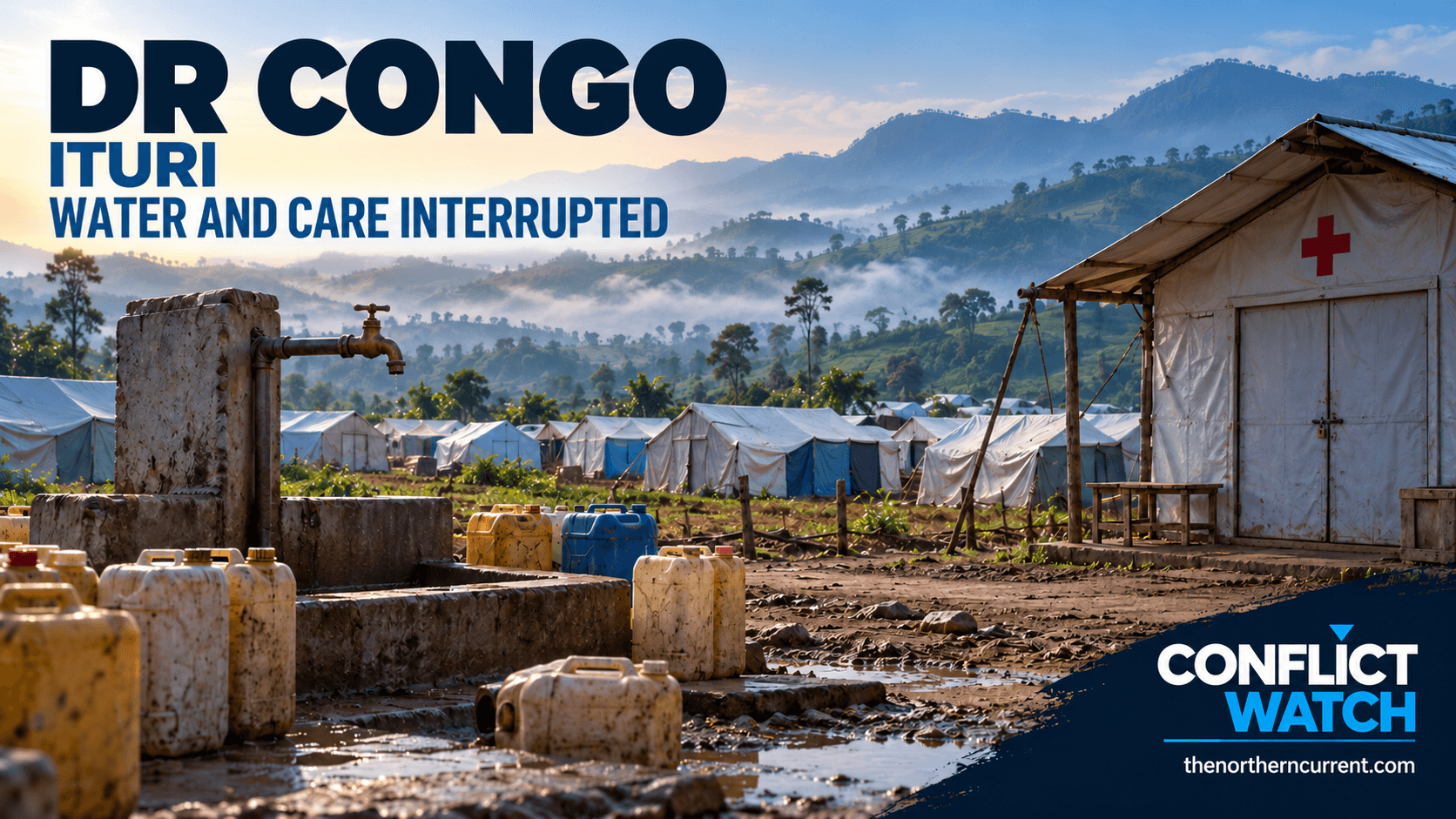
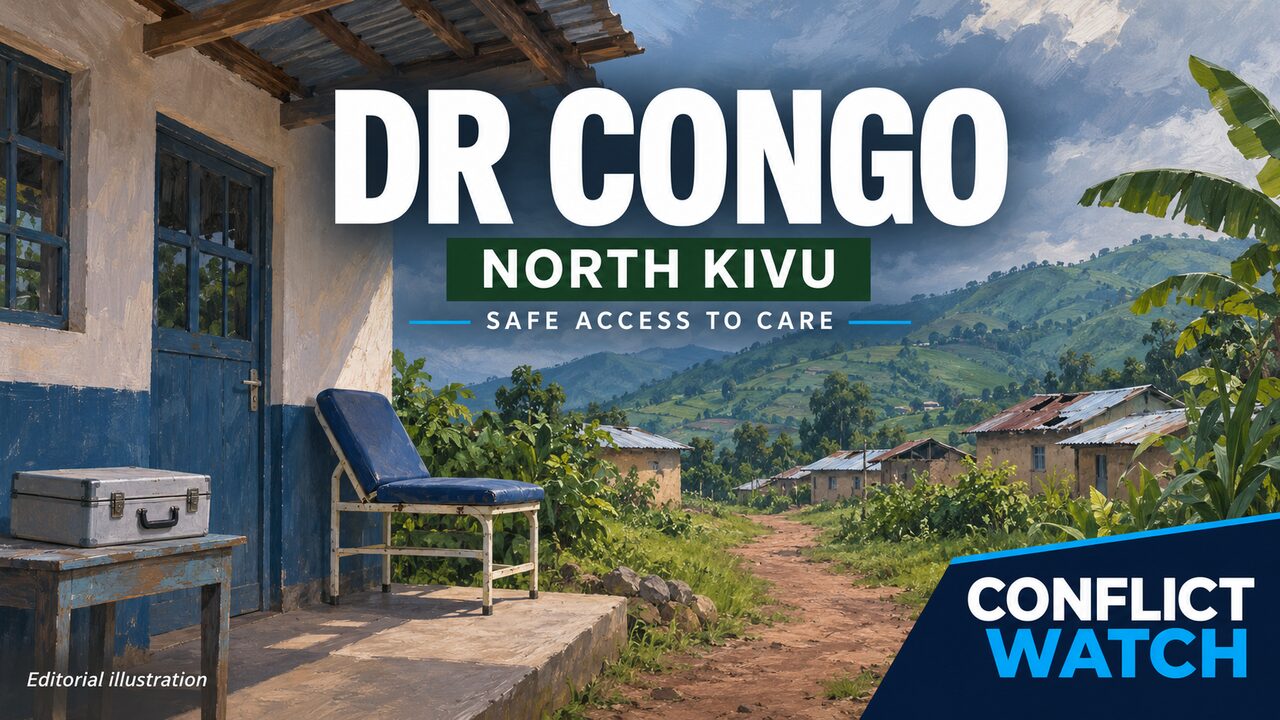
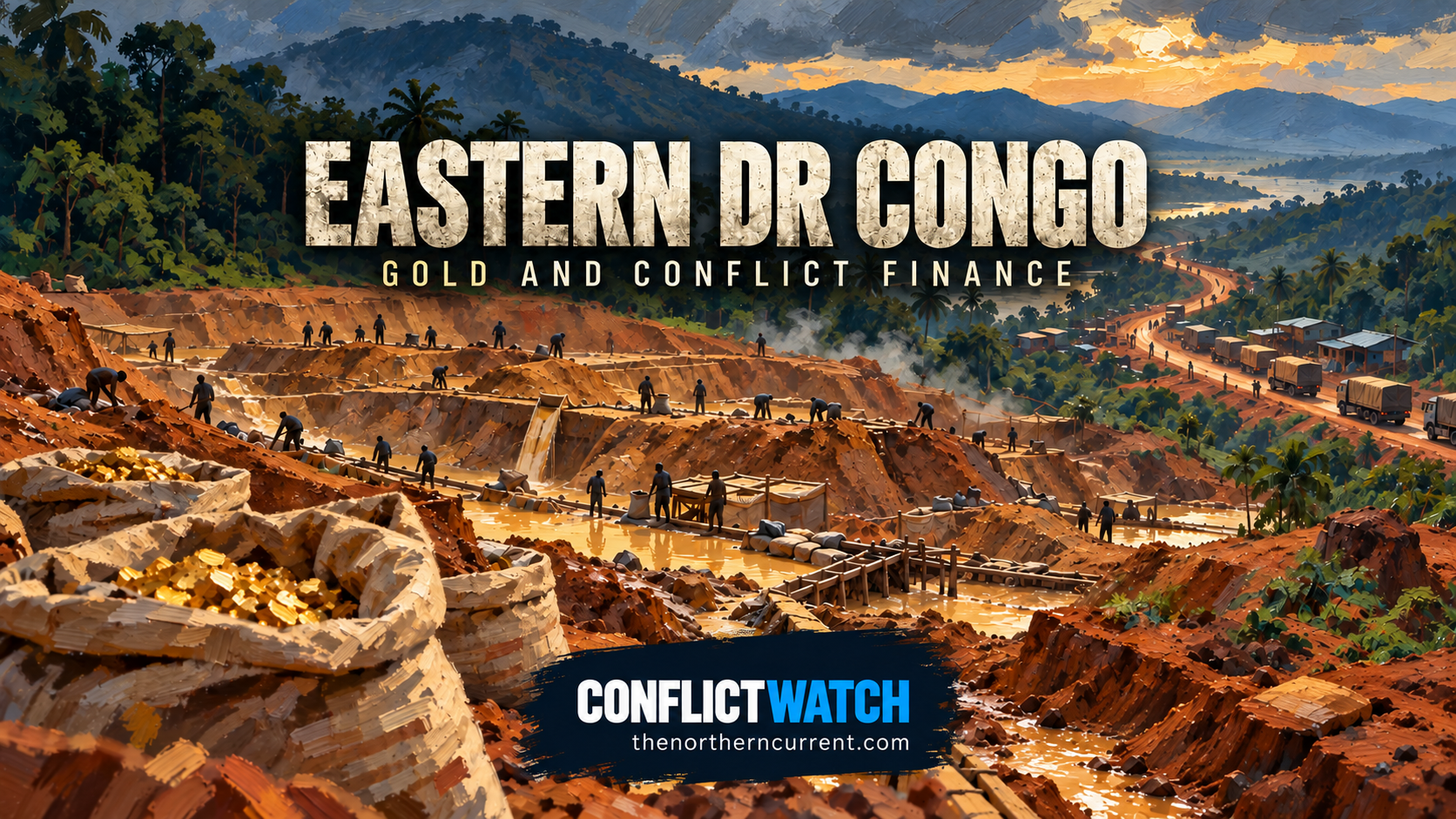
Cover: Editorial illustration of disrupted farming and food access in eastern DR Congo; not a photograph of a specific family, location or incident.
Leave a comment
Join the discussion. Please follow our Community Standards.
Sign in or create an account to leave a comment.
Choose your public display name before submitting. Your email address stays private.
No published comments yet.