



CONFLICT WATCH — Palestine · Civilian conditions
Palestinians in Gaza face another winter with inadequate shelter, damaged essential services and continuing Israeli strikes, while recent humanitarian reporting from the West Bank describes demolitions, settler violence and restrictions that disrupt civilian life.
The latest assessments show why an announced ceasefire cannot, by itself, establish that families are safe or that basic services have recovered. This report brings together dated accounts from humanitarian agencies and Reuters; it is not based on an independent TNC visit or original interviews.
Gaza: shelter supplies fall far short of winter needs
At an October 9 UN briefing, the International Organization for Migration said nearly two million people in Gaza still needed shelter assistance. The supply pipeline covered only about 17 per cent of identified winter shelter needs.
IOM said half of existing tents and makeshift shelters were in poor or very poor condition. Funding shortages and Israeli restrictions on essential shelter materials prevented the response from reaching the necessary scale.
The agency reported that roughly 8,600 emergency shelter kits remained outside Gaza after being denied entry. At the briefing, IOM’s regional crisis coordinator explained that the kits had been classified as potentially dual-use or dangerous goods. He said some tents and tarpaulins were entering, but more durable shelter options remained restricted.
Reuters reported on October 9 that Israel cited security concerns for its restrictions. COGAT, the Israeli military body overseeing aid flows, had not immediately answered Reuters’ request for comment.
Strikes continue despite the ceasefire
Reuters reported on October 12 that an Israeli strike killed at least two Palestinians in southern Gaza, according to health officials. Medics separately reported three deaths in a strike on a tent in Mawasi late the previous evening.
The Israeli military said it targeted militants. Israel says Hamas has been rearming and attacking in breach of the ceasefire; Hamas denies those claims and accuses Israel of undermining the agreement. These are attributed positions, not findings independently established by TNC.
Water, healthcare and food remain under strain
OCHA’s report titled October 2, published October 5, warned that funding shortages would reduce cooked meals and household food-parcel distributions from October. It also described medical-supply shortages affecting healthcare.
In its late-September reporting, the agency said water production at southern Gaza’s two seawater desalination plants had fallen because of shortages of parts and equipment. The WASH Cluster estimated that 74 per cent of the population relied on trucked drinking water.
UNICEF’s May 29 water assessment provides earlier context: it reported widespread water insecurity and said many families could not collect even six litres per person each day for drinking and cooking. Those May findings are not a new October survey.
West Bank: families displaced and services disrupted
For September 22–28, OCHA reported that Israeli authorities demolished or sealed 73 Palestinian-owned structures, displacing 93 people, including 55 children. It recorded more than 50 settler attacks resulting in casualties or property damage during that reporting period.
In Jinba, a September 23 demolition displaced 55 people, including 32 children; families remained in the community, sheltering in caves.
These West Bank incidents are distinct from Gaza’s military and humanitarian crisis. Combining the two into one undifferentiated casualty or displacement count would conceal different locations, causes and reporting periods.
The evidence behind this report
The figures above are attributed to the agencies or health officials that reported them. Humanitarian assessments have different coverage periods and may be revised. TNC has not independently verified every incident or established the identities and civilian status of everyone killed in the strikes described here.
The central reporting question remains concrete: whether people can obtain shelter, safe water, food, medical care and protection from violence. Future reporting will seek firsthand perspectives without treating a government’s motives as already proven.
Related: What the UN genocide finding and Netanyahu’s ICC arrest warrant mean →
Sources and reporting dates
- UN Geneva briefing, October 9, 2026 — IOM shelter assessment
- Reuters, October 9 — shelter restrictions and Israeli response
- Reuters, October 12 — strikes and parties’ positions
- OCHA report titled October 2, published October 5 — late-September reporting periods specified in the report
- UNICEF water and sanitation assessment, May 29, 2026 — historical context
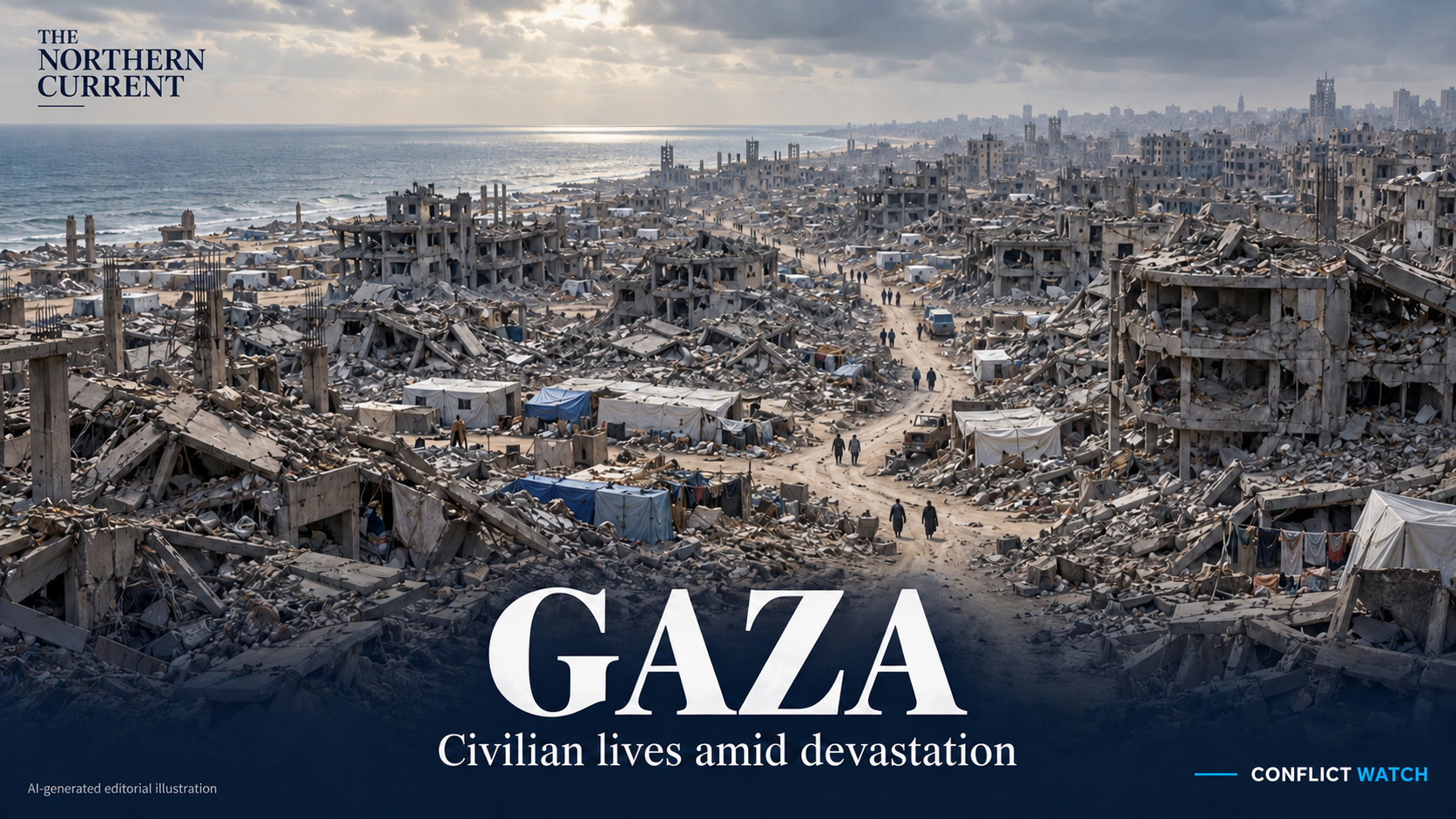
Cover: AI-generated editorial illustration of Gaza’s devastation. It does not document a particular location or incident and does not depict the West Bank.
.jpg)

.jpg)
Leave a comment
Join the discussion. Please follow our Community Standards.
Sign in or create an account to leave a comment.
Use your ChatGPT account to comment. Choose your public display name before submitting.
No published comments yet.